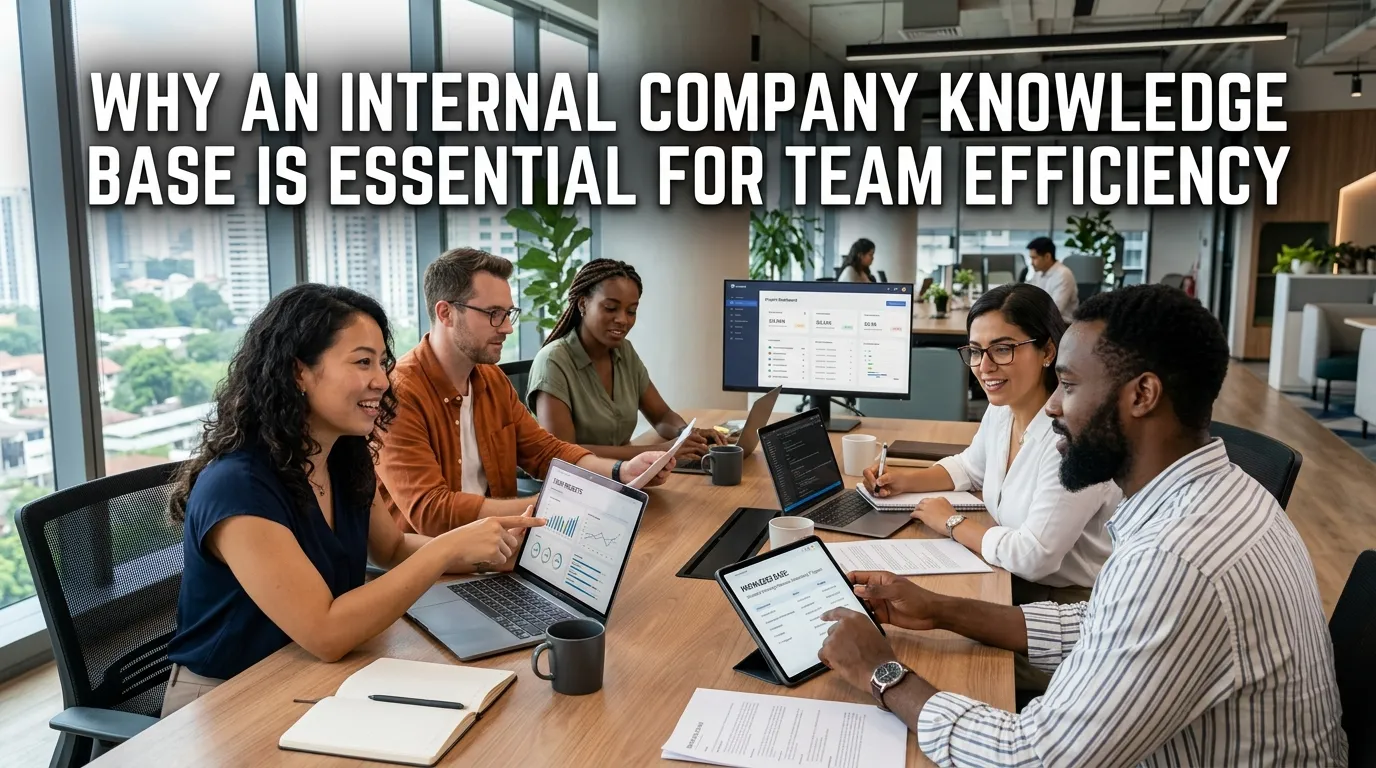
An internal company knowledge base centralizes business information, improves collaboration, reduces repetitive tasks, speeds onboarding, and supports better decision-making. It enhances team efficiency, ensures consistency, and boosts productivity across all departments in modern organizations.
An internal company knowledge base is a centralized digital system where businesses store important information like policies, guides, and training materials. It helps employees quickly access accurate data, reduces repetitive questions, and improves communication. Organizing knowledge in one place, it enhances team efficiency, supports faster decision-making, and ensures consistency across all departments.
What Is an Internal Company Knowledge Base?
An internal company knowledge base is a centralized digital system where businesses store and organize all important information in one accessible place. This includes company policies, SOPs, training manuals, FAQs, project documentation, and troubleshooting guides. Instead of wasting time searching emails or repeatedly asking colleagues, employees can quickly find what they need. A well-designed internal company knowledge base is usually cloud-based, allowing access from anywhere and at any time. It ensures consistency across teams by providing a single source of truth. This improves communication, reduces confusion, and helps employees follow standardized processes. Ultimately, it supports faster decision-making and enhances overall workplace efficiency and productivity in a structured way.
Importance of Internal Company Knowledge Base
The importance of an internal company knowledge base lies in its ability to streamline business operations and improve efficiency. Without it, organizations often struggle with scattered information, miscommunication, and repeated tasks. A properly structured internal company knowledge base ensures that employees always have access to accurate and updated information. This reduces delays in work processes and improves overall productivity. It also minimizes dependency on senior employees for basic queries, allowing them to focus on higher-value tasks. Additionally, it preserves critical organizational knowledge even when employees leave. This continuity helps businesses maintain smooth operations, reduce errors, and ensure long-term stability in an increasingly fast-paced work environment.
Centralized Information Management
 Centralized information management is one of the biggest advantages of an internal company knowledge base. Instead of storing files across multiple platforms or folders, all essential data is kept in one organized system. This makes it easier for employees to search, access, and update information quickly. A centralized internal company knowledge base reduces duplication of content and ensures that outdated information is not used in daily operations. It also improves transparency between departments, as everyone works with the same updated resources. Businesses can categorize information into sections such as HR, IT, marketing, and operations, making navigation simple. This structured approach saves time, improves accuracy, and enhances overall workplace efficiency significantly.
Improving Team Collaboration
An internal company knowledge base plays a major role in improving team collaboration across departments. When employees share access to the same knowledge platform, they can work together more effectively without constant interruptions. Teams can document updates, share insights, and track project progress in real time. This reduces communication gaps and ensures that everyone stays aligned with project goals. It is especially useful for remote and hybrid teams, where direct communication may be limited. A shared internal company knowledge base minimizes misunderstandings and improves coordination between team members. As a result, collaboration becomes smoother, faster, and more efficient, leading to better productivity and higher-quality outcomes in business projects.
Enhancing Employee Onboarding
Employee onboarding becomes significantly easier with an internal company knowledge base. New employees often need time to understand company processes, tools, and expectations. A structured knowledge base provides them with all necessary training materials, SOPs, and FAQs in one place. This allows them to learn independently without relying heavily on managers or HR staff. It ensures consistency in training across all departments and roles. An internal company knowledge base helps new hires adapt faster, reducing the learning curve and increasing productivity from day one. It also reduces the workload on senior employees who would otherwise spend time repeatedly explaining basic procedures, making the onboarding process more efficient and scalable.
Reducing Repetitive Queries
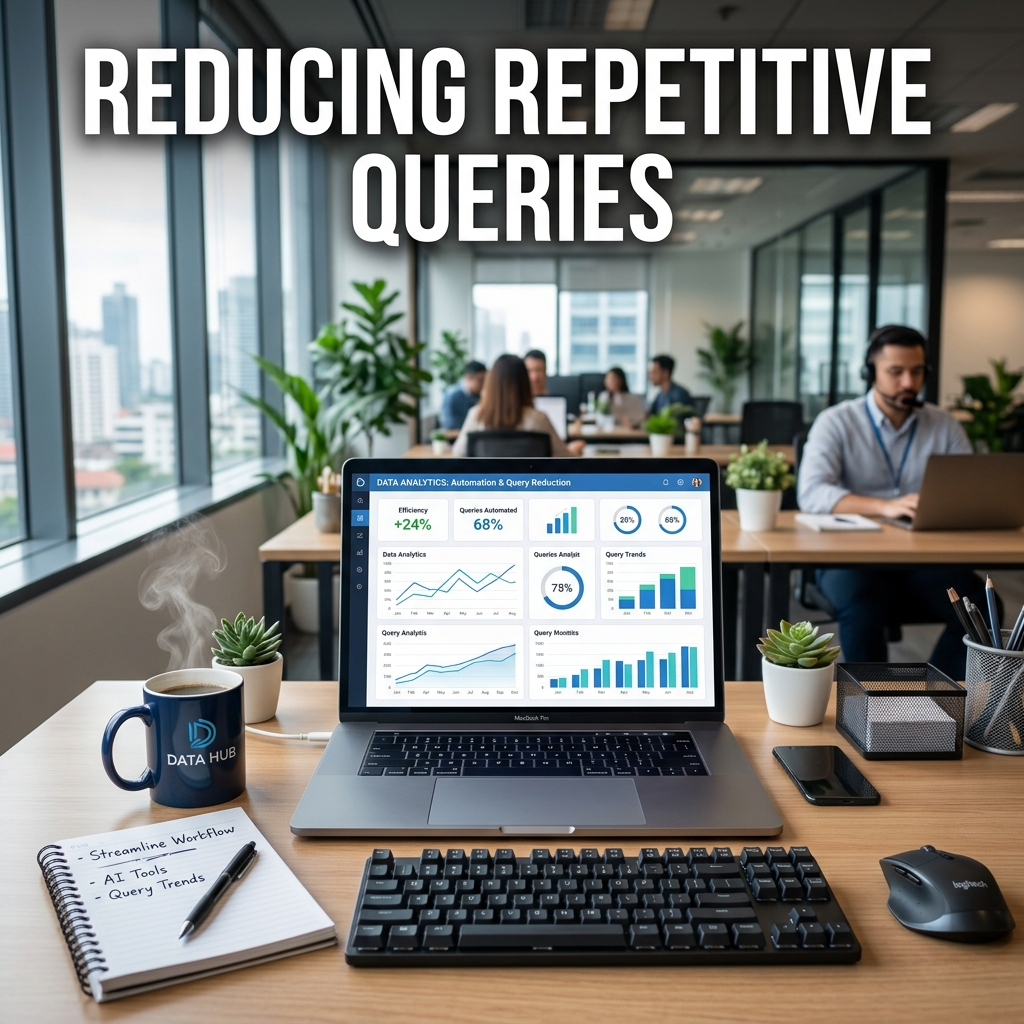 One of the most practical benefits of an internal company knowledge base is the reduction of repetitive questions within teams. Employees often ask similar queries about workflows, tools, or policies, which can slow down productivity. By using a knowledge base, employees can find answers independently without interrupting others. This saves valuable time for both staff and managers. A well-maintained internal company knowledge base ensures that commonly asked questions are documented clearly and easily searchable. Over time, this reduces communication overload and allows teams to focus on more important tasks. It also promotes self-learning and independence, creating a more efficient and self-sufficient work environment across the organization.
Improving Decision Making
An internal company knowledge base significantly improves decision-making by providing quick access to reliable and structured information. When employees and managers can easily find accurate data, they can make faster and more confident decisions. This reduces guesswork and minimizes the risk of errors in daily operations. An internal company knowledge base often includes reports, case studies, and historical data that support strategic thinking. It helps create a data-driven work culture where decisions are based on facts rather than assumptions. As a result, businesses can respond more quickly to challenges, identify opportunities faster, and improve overall performance and efficiency across all departments in a consistent manner.
Role of Internal Company Knowledge Base in Remote Work Efficiency
An internal company knowledge base becomes even more important in remote and hybrid work environments. When teams are not physically together, communication gaps and delays can easily happen. A well-structured internal company knowledge base ensures that every employee has equal access to updated information, regardless of location. It reduces dependency on real-time communication and allows team members to work independently with confidence. Employees can quickly find answers, follow procedures, and complete tasks without waiting for responses. This improves productivity and reduces frustration in remote settings. It also helps managers maintain visibility and consistency across distributed teams, ensuring smooth workflow and better coordination.
Key Benefits
- Enables smooth remote collaboration
- Reduces dependency on meetings and calls
- Provides 24/7 access to information
- Improves task independence
- Ensures consistent communication
| Area |
Before Knowledge Base |
After Knowledge Base |
| Communication |
Slow and dependent |
Fast and self-service |
| Task Completion |
Delayed |
Faster and independent |
| Information Access |
Scattered sources |
Centralized platform |
| Team Coordination |
Confusing |
Structured and clear |
Tools and Technology for Knowledge Base
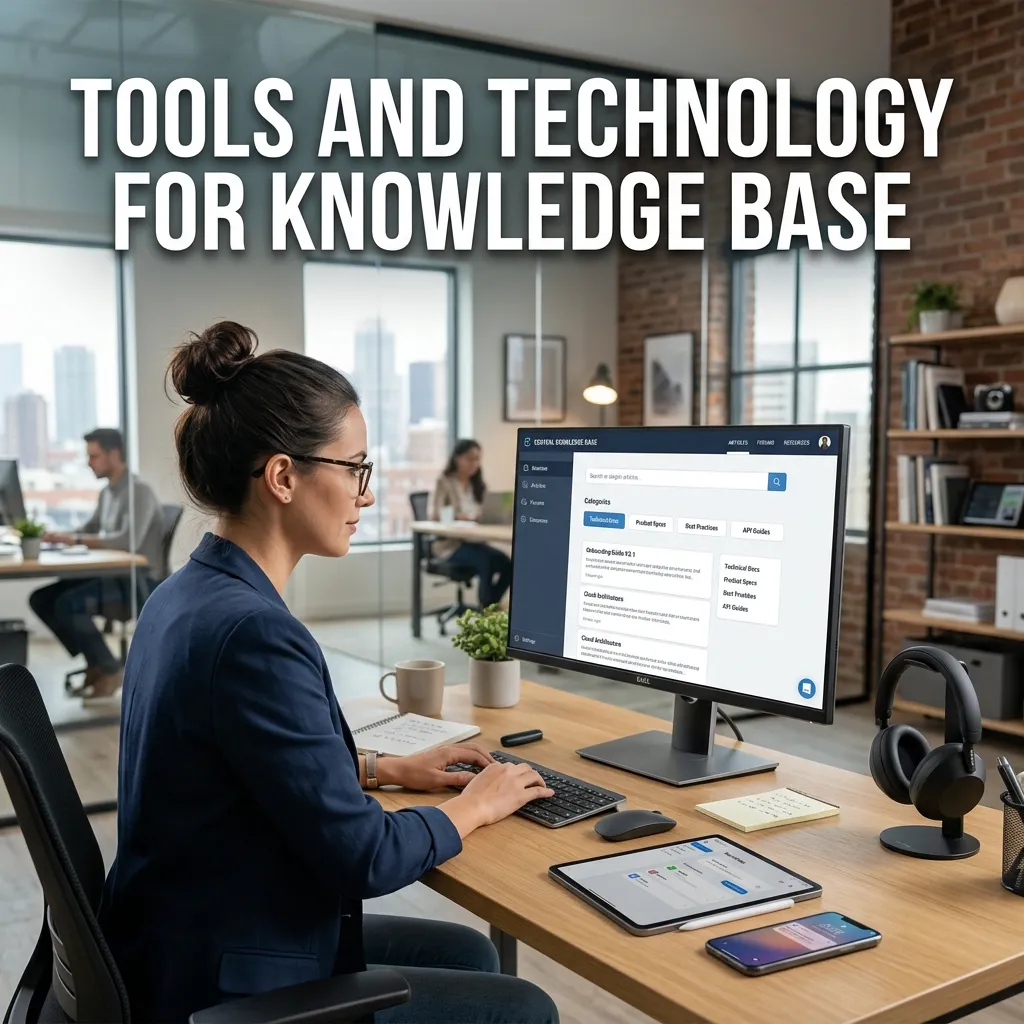 Modern internal company knowledge base systems rely heavily on advanced tools and technologies to improve accessibility and efficiency. Platforms like Notion, Confluence, and SharePoint are widely used to organize and manage business information. These tools offer features like search optimization, content categorization, and easy editing. Many internal company knowledge base systems now include AI-powered search functions that provide instant answers to employee queries. Integration with communication tools like Slack or Microsoft Teams further improves accessibility and collaboration. Cloud-based technology ensures that employees can access information anytime, from any location. These advancements make knowledge sharing faster, smarter, and more scalable for businesses of all sizes.
Best Practices for Maintaining a Knowledge Base
Maintaining an effective internal company knowledge base requires regular updates and proper organization. Businesses should ensure that all content is reviewed frequently to avoid outdated or incorrect information. Assigning content owners helps maintain accuracy and accountability across departments. Organizing information into clear categories improves navigation and usability. Encouraging employees to contribute updates ensures continuous improvement of the system. Regular audits help identify missing or irrelevant content. Using simple language and structured formatting makes information easier to understand for all users. A well-maintained internal company knowledge base becomes a powerful long-term asset that continuously supports productivity, reduces confusion, and improves overall team efficiency in a structured and sustainable way.
Future of Internal Company Knowledge Base with AI Integration
The future of the internal company knowledge base is strongly connected with artificial intelligence and automation. AI-powered automation is making knowledge bases smarter, faster, and more interactive. Instead of manually searching documents, employees can now get instant answers through intelligent search tools. An advanced internal company knowledge base can also predict user needs and suggest relevant information automatically. This reduces effort and increases productivity significantly. Businesses are now adopting AI chatbots, automated tagging, and smart categorization to improve efficiency. As technology evolves, knowledge bases will become more personalized, adaptive, and deeply integrated into daily workflows, making them an essential part of every modern organization.
Key Advantages
- AI-powered instant answers
- Smart content suggestions
- Automated document organization
- Faster employee support
- Personalized learning experience
| Feature |
Traditional System |
AI-Powered System |
| Search Method |
Manual |
Intelligent AI search |
| Response Speed |
Slower |
Instant |
| Content Updates |
Manual updates |
Automated suggestions |
| User Experience |
Basic |
Smart and personalized |
| Efficiency Level |
Moderate |
Highly efficient |