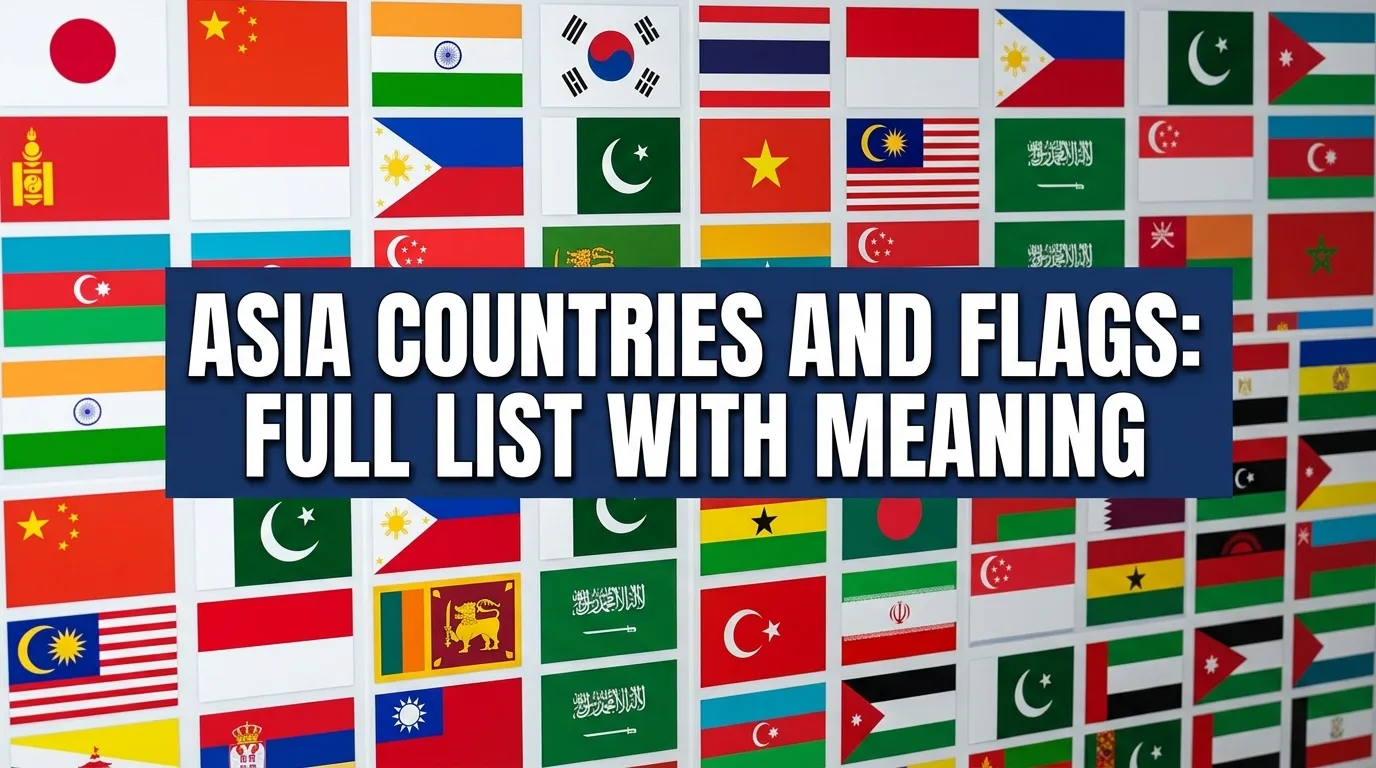
The countries and flags of Asia represent diverse cultures, histories, and identities. Each flag symbolizes national pride, independence, and values, helping us understand Asia’s unity in diversity through powerful visual and cultural meanings.
The countries and flags of Asia showcase the rich diversity of the world’s largest continent. Each country has a unique flag that reflects its history, culture, religion, and national identity. Learning about the countries and flags of Asia helps us understand how nations express pride and unity through symbols. This guide explores their meanings in a simple and informative way.
East Asia Countries and Flags
East Asia is a major part of the countries and flags of Asia, including China, Japan, South Korea, North Korea, Mongolia, and Taiwan. Each flag in this region carries deep cultural and historical meaning. Japan’s flag features a red circle symbolizing the rising sun, while China’s flag represents unity under leadership with its five stars. South Korea’s flag shows balance through yin-yang philosophy, and Mongolia’s flag displays the Soyombo symbol representing freedom and strength. North Korea and Taiwan also reflect political and historical identity through their designs. These flags are globally recognized and reflect strong national pride, ancient philosophies, and modern development across East Asia.
South Asia Countries and Flags
South Asia is one of the most vibrant regions in the countries and flags of Asia, including India, Pakistan, Bangladesh, Nepal, Sri Lanka, Bhutan, and the Maldives. India’s flag represents courage, peace, and growth through its tricolor design. Pakistan’s green and white flag symbolizes Islamic identity and minority inclusion. Bangladesh’s green flag with a red circle reflects independence and natural beauty. Nepal stands out with the world’s only non-rectangular flag, symbolizing uniqueness and tradition. Sri Lanka, Bhutan, and the Maldives also reflect cultural and religious values in their flags. These designs represent independence struggles, rich traditions, and deep emotional connections with national identity across South Asia.
Southeast Asia Countries and Flags
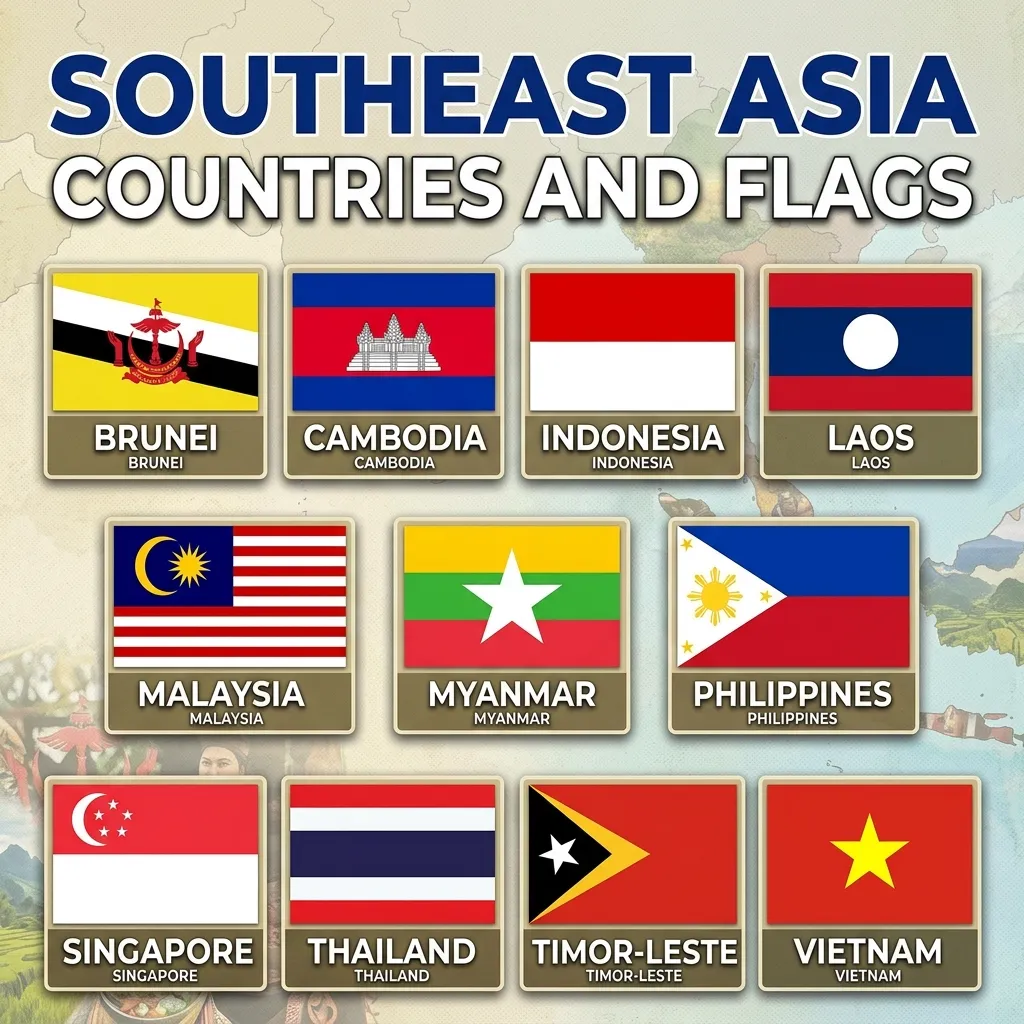 Southeast Asia plays a dynamic role in the countries and flags of Asia, including Thailand, Vietnam, Indonesia, Malaysia, the Philippines, Singapore, Myanmar, Laos, Cambodia, Brunei, and Timor-Leste. Indonesia’s red and white flag symbolizes courage and purity, while Thailand’s flag represents the nation, religion, and monarchy. Vietnam’s red flag with a yellow star reflects unity and revolution. Malaysia’s flag represents national unity and Islamic influence. Other countries like Singapore and the Philippines also reflect colonial history and independence through symbolic designs. These flags are simple yet meaningful, often inspired by independence movements, cultural harmony, and national identity across this diverse and rapidly developing region.
Central Asia Countries and Flags
Central Asia is an important part of the countries and flags of Asia, including Kazakhstan, Uzbekistan, Turkmenistan, Kyrgyzstan, and Tajikistan. These flags reflect a strong cultural revival after independence from the Soviet Union. Kazakhstan’s flag shows a golden sun and eagle symbolizing freedom and strength. Uzbekistan’s blue, white, and green stripes represent sky, peace, and nature. Turkmenistan’s flag is highly detailed with traditional carpet patterns reflecting its heritage. Kyrgyzstan’s flag includes a sun and tunduk symbol representing unity and tradition. Tajikistan’s flag represents national identity and cultural pride. Overall, Central Asian flags highlight independence, history, and cultural restoration in modern times.
West Asia Countries and Flags
West Asia, also known as the Middle East, is a key region in the countries and flags of Asia, including Saudi Arabia, the UAE, Qatar, Iran, Iraq, Israel, Jordan, and Lebanon. Saudi Arabia’s green flag features Islamic text and a sword symbolizing justice and faith. Iran’s flag reflects religious and national identity through symbolic colors and inscriptions. UAE’s flag represents unity among emirates, while Qatar and Bahrain use bold colors to reflect their heritage. Israel’s flag features the Star of David and blue stripes symbolizing tradition and identity. These flags strongly represent religion, politics, and history, making West Asia’s flags deeply meaningful and globally significant.
Symbolism Behind Asian Flags
The countries and flags of Asia are rich in symbols such as stars, suns, moons, animals, and religious elements. These symbols often represent unity, strength, independence, and spirituality. Red commonly symbolizes courage or revolution, green often represents nature or Islamic culture, while blue represents peace and stability. Many flags include philosophical or religious meanings, such as yin-yang in Korea or Islamic calligraphy in Middle Eastern countries. These symbols are carefully chosen to represent national identity in a simple yet powerful visual form. Overall, symbolism helps people understand the deeper meaning behind each flag and its connection to culture and history.
Global Importance of Countries and Flags of Asia
The countries and flags of Asia play an important role on the global stage by representing the continent’s political strength, cultural diversity, and historical depth. These flags are recognized worldwide during international events such as the Olympics, United Nations meetings, and diplomatic summits, where each design symbolizes a nation’s identity and values. Asia’s flags also help promote tourism, cultural exchange, and international relations by creating strong visual recognition for each country. From ancient traditions to modern independence stories, the countries and flags of Asia continue to influence how the world understands Asia as a powerful and diverse continent.
Comparison of Asian Regions Flags
The countries and flags of Asia vary greatly depending on region, culture, and history. East Asia focuses on philosophical and simple symbolic designs, while South Asia uses vibrant colors and emotional meaning. Southeast Asia reflects unity and independence themes, whereas West Asia includes strong religious and historical symbols. Central Asia shows modern designs influenced by post-Soviet independence and cultural revival.
Key Points
- East Asia: Simple, symbolic designs
- South Asia: Colorful and emotional flags
- Southeast Asia: Unity and independence themes
- West Asia: Religious and historical symbols
- Central Asia: Modern identity and heritage blend
| Region | Flag Style | Main Influence |
|---|---|---|
| East Asia | Minimal & symbolic | Philosophy & tradition |
| South Asia | Colorful & detailed | Independence & culture |
| Southeast Asia | Bold & simple | Unity & nationalism |
| West Asia | Script & symbols | Religion & history |
| Central Asia | Modern patterns | Post-independence identity |
History Behind Asian Flags
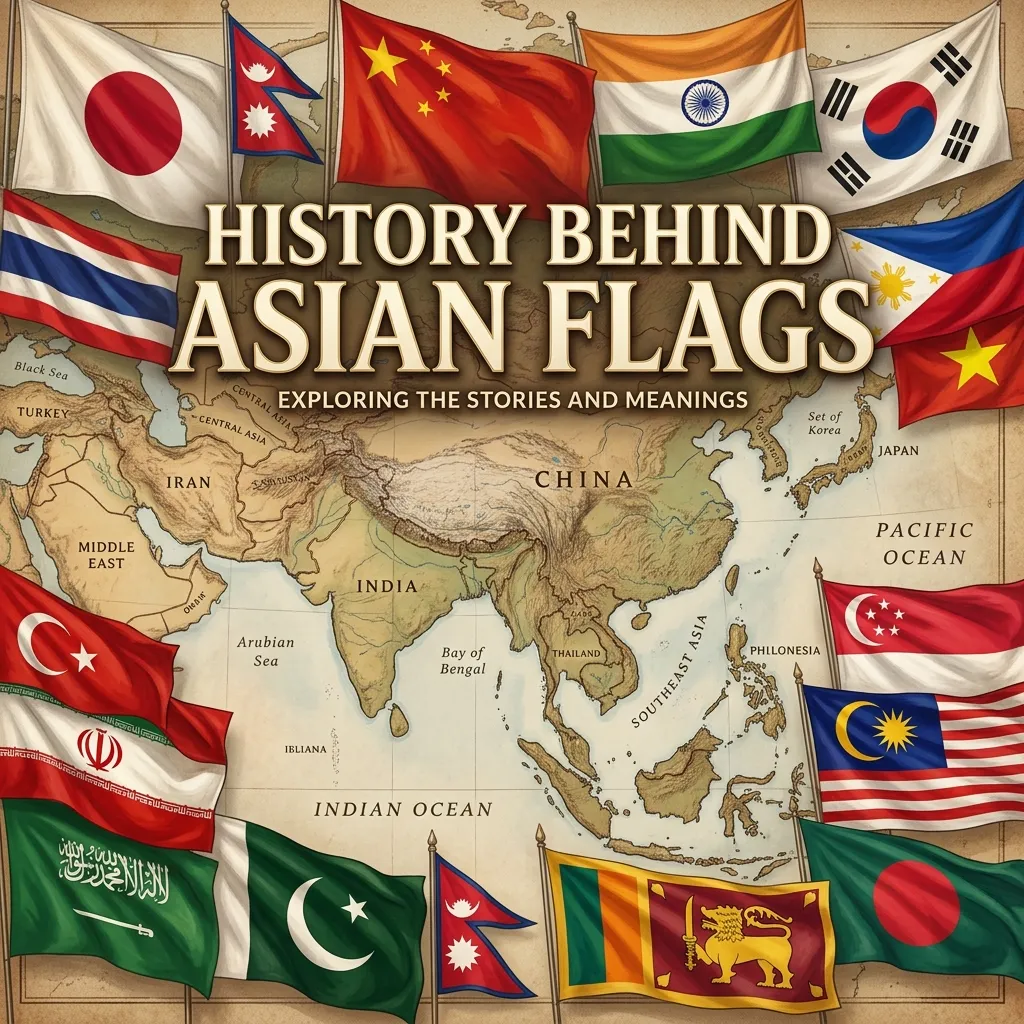 The history of the countries and flags of Asia is deeply connected to independence movements, ancient kingdoms, and political revolutions. Many flags were redesigned during the 20th century after countries gained independence from colonial powers. India and Pakistan adopted new flags in 1947, while Vietnam and China redesigned theirs after major political changes. Some flags still carry ancient symbols from empires and dynasties, showing historical continuity. Over time, flags have evolved but continue to preserve cultural identity and national pride. This historical journey shows how Asian countries express their struggles, achievements, and transformation through powerful visual symbols.
Importance of Flags in Asian Identity
Flags in the countries and flags of Asia play an important role in national identity, unity, and global recognition. They are displayed during national holidays, sports events, and international diplomacy to represent each country. Citizens often feel emotional pride when seeing their national flag, as it symbolizes freedom, independence, and unity. In global events like the Olympics, flags help identify nations instantly and build international presence. Beyond politics, flags also strengthen cultural unity and remind people of shared history and values. They act as powerful symbols that connect citizens to their nation and reinforce pride in their identity across Asia.
Major Facts about Countries and Flags of Asia
The countries and flags of Asia are filled with fascinating facts that highlight the continent’s diversity and cultural depth. Asia has the largest number of countries in the world, and each flag represents a unique story of independence, religion, and history. From symbolic colors to powerful national emblems, these flags are designed to express identity and unity in simple visual forms that are globally recognized.
Key Points
- Asia has around 49 countries with unique flags
- Many flags represent independence movements
- Colors often symbolize culture and religion
- Symbols include stars, suns, and animals
- Flags are used in global events and diplomacy
| Feature | Description |
|---|---|
| Number of Countries | Around 49 in Asia |
| Common Symbols | Stars, sun, moon, animals |
| Main Colors | Red, green, blue, white |
| Purpose | Identity, unity, independence |
| Usage | Sports, diplomacy, and national events |
Cultural Diversity in Asian Flags
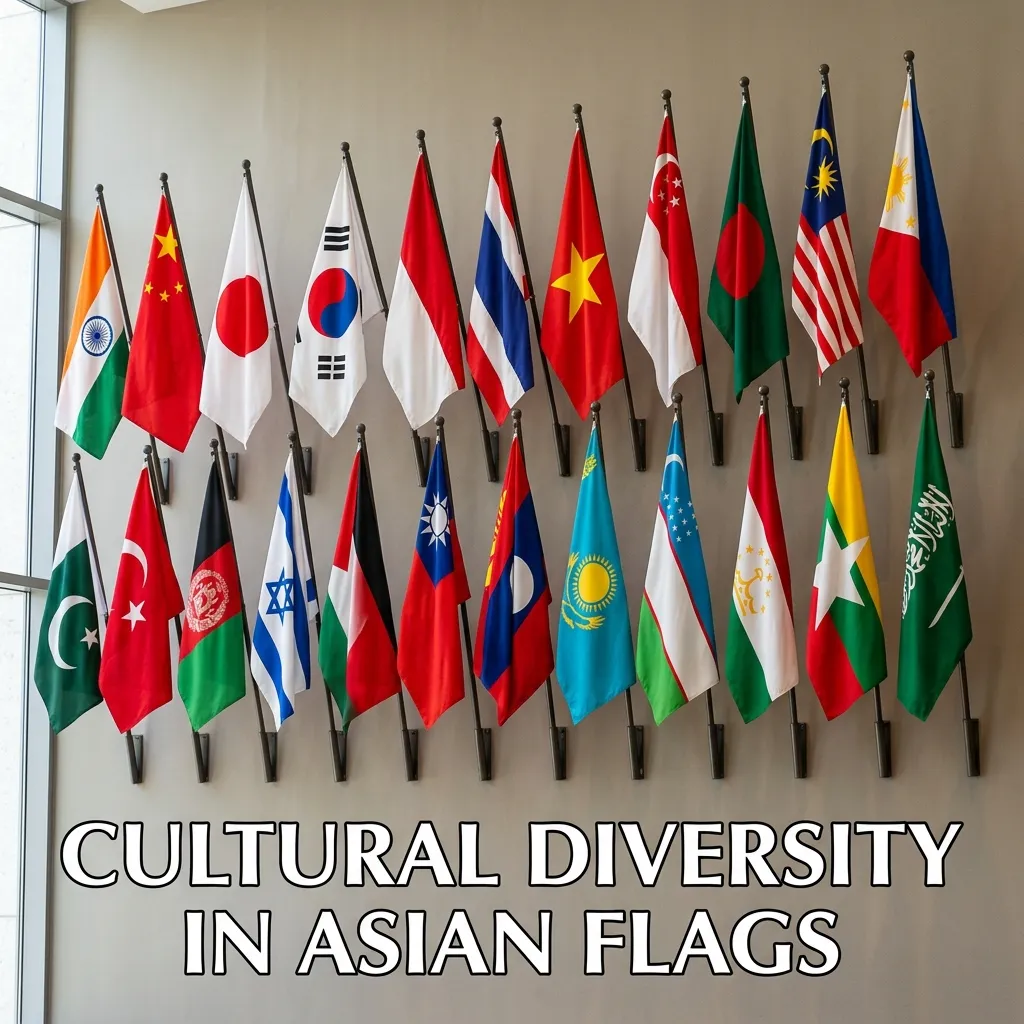 The countries and flags of Asia reflect incredible cultural diversity shaped by religion, history, language, and traditions. East Asia often uses philosophical and symbolic designs, South Asia features vibrant and colorful patterns, Southeast Asia reflects independence and unity themes, while West Asia includes strong religious symbolism. Central Asia shows cultural revival after independence, adding modern identity to traditional roots. Despite differences, all flags share a common purpose: representing national pride, unity, and independence. This diversity makes Asia one of the most culturally rich continents in the world, where every flag tells a unique story of identity and heritage.
Conclusion
The countries and flags of Asia provide deep insight into the continent’s culture, history, and identity. Each flag represents more than a design—it tells the story of a nation’s struggles, achievements, and values. From East Asia’s global symbols to South Asia’s vibrant colors and West Asia’s religious meanings, every flag reflects a unique heritage. Learning about the countries and flags of Asia helps us understand how nations express pride and unity through symbols. It is not just geography but a journey through history and culture across the world’s largest and most diverse continent.
Frequently Asked Questions
1. What are the countries and flags of Asia?
The countries and flags of Asia include around 49 nations, each with a unique flag representing culture, history, and identity. These flags symbolize independence, unity, and national pride across diverse regions like East, South, West, Central, and Southeast Asia.
2. How many countries are in Asia?
Asia has approximately 49 countries, depending on political recognition. Each country in the countries and flags of Asia has a distinct flag that reflects its heritage, religion, geography, and historical background, making Asia the most diverse continent in the world.
3. Why are Asian flags important?
Asian flags are important because they represent national identity, unity, and independence. In the countries and flags of Asia, flags are used in global events, diplomacy, and celebrations to express pride and distinguish each nation on the international stage clearly.
4. What do colors in Asian flags mean?
In the countries and flags of Asia, colors carry deep meanings. Red often symbolizes courage or revolution, green represents nature or Islam, blue shows peace, and white represents purity. Each country uses colors to express cultural values and national identity.
5. Which Asian flag is unique?
Nepal has the most unique flag in the countries and flags of Asia because it is the only non-rectangular national flag in the world. Its design represents Hindu and Buddhist traditions, mountains, and the country’s deep historical and cultural identity.
6. What is the meaning of Japan’s flag?
Japan’s flag, in the countries and flags of Asia, features a red circle representing the sun. It symbolizes energy, life, and the nation’s identity as the “Land of the Rising Sun,” reflecting Japan’s cultural heritage and historical significance.
7. What does China’s flag represent?
China’s flag in the countries and flags of Asia includes one large star and four smaller stars. It symbolizes unity under leadership and the connection between the people and the government, representing national strength and collective progress.
8. How do flags reflect culture in Asia?
Flags in the countries and flags of Asia reflect culture through symbols, colors, and designs. Many include religious icons, historical references, or natural elements that represent a nation’s traditions, beliefs, and identity across generations and regions.
9. When were most Asian flags created?
Many flags in the countries and flags of Asia were created or redesigned in the 20th century after independence from colonial rule or political change. These flags represent new national identities, freedom, and the modernization of Asian countries.
10. What makes Asian flags different from others?
Asian flags in the countries and flags of Asia are unique due to their strong cultural, religious, and historical symbolism. They often include meaningful colors, stars, suns, and spiritual elements that reflect deep traditions and national identity.