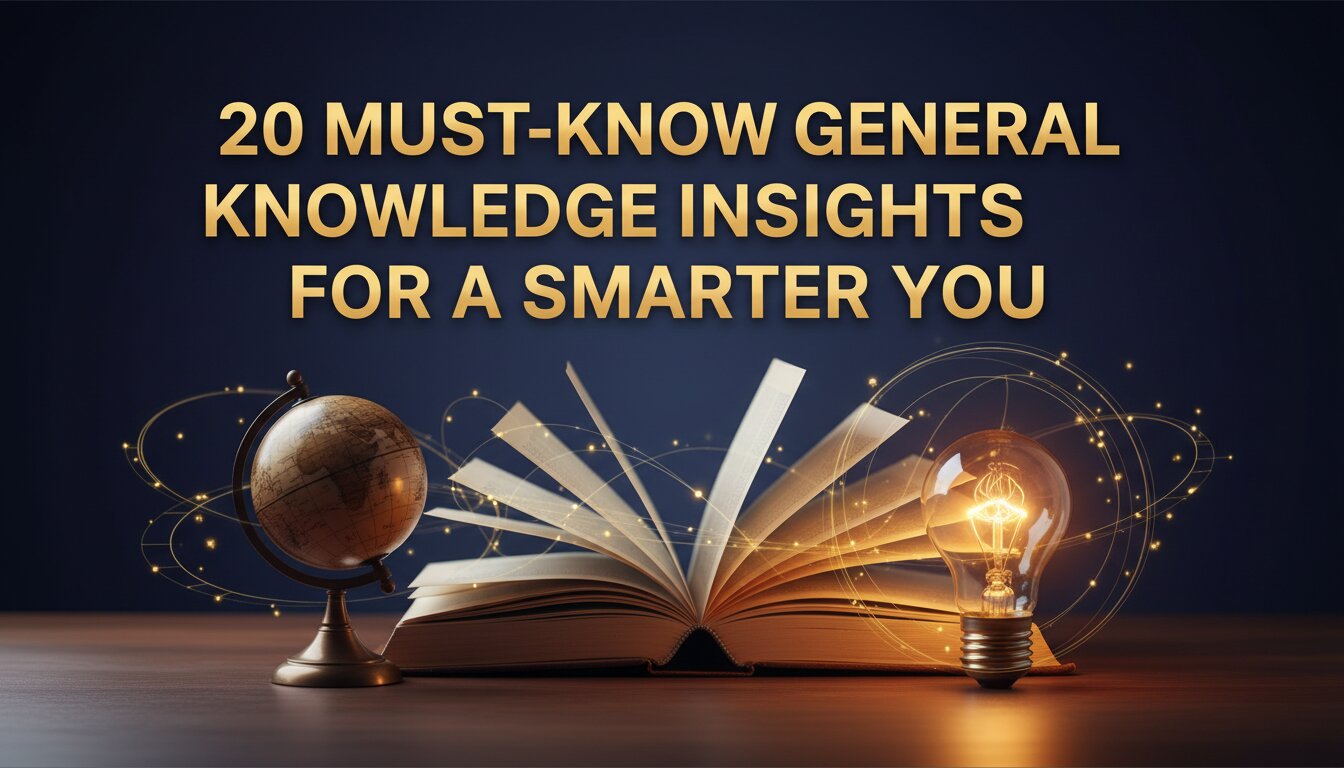
A strong General Knowledge Insight improves awareness, decision-making, and communication skills by covering science, history, geography, current affairs, and culture. It helps individuals stay informed, think logically, and confidently handle real-life personal and professional situations.
A strong General Knowledge Insight is essential for understanding the world around us and improving everyday decision-making. It includes awareness of current affairs, science, history, geography, and culture. This knowledge builds confidence, sharpens thinking skills, and improves communication. In today’s fast-changing world, developing a solid General Knowledge Insight helps individuals stay informed, adaptable, and prepared for personal and professional growth.
Importance of General Knowledge in Daily Life
General knowledge plays a vital role in everyday decision-making and real-life situations. It is not limited to textbooks or exams; instead, it directly impacts how we understand the world around us. A strong General Knowledge Insight helps individuals interpret news, understand social issues, and respond to practical challenges more effectively. For example, basic geographical awareness supports better travel planning, while awareness of current events improves conversations in social and professional settings. It also builds confidence when interacting with others. People with better knowledge tend to make quicker and more informed decisions. Overall, improving your General Knowledge Insight enhances adaptability, problem-solving ability, and awareness of changing global conditions in daily life.
Role of Current Affairs Awareness
Current affairs form an essential part of a strong General Knowledge Insight, as they reflect real-time global developments. Staying updated with politics, economics, science, technology, and environmental changes helps individuals understand how the world is evolving. Reading newspapers, watching credible news channels, and following reliable digital platforms can significantly improve awareness. This knowledge is especially valuable for competitive exams, job interviews, and group discussions. It also helps in forming logical opinions on important social and global issues. With a strong General Knowledge Insight, individuals stay connected to reality and can actively participate in meaningful conversations. Ultimately, current affairs awareness ensures you are informed, confident, and socially aware in both personal and professional environments.
Science and Technology Understanding
 Science and technology are the backbone of modern life, influencing nearly every aspect of daily living. From smartphones and the internet to space exploration and medical advancements, everything is driven by scientific progress. A strong General Knowledge Insight includes a basic understanding of how these systems work. Knowing about innovations like renewable energy, artificial intelligence, and digital communication makes individuals more aware and adaptable. It also helps in appreciating how technology improves comfort and efficiency in life. As technology evolves rapidly, keeping up with scientific developments is essential for everyone. Building a solid General Knowledge Insight in this area enhances curiosity, problem-solving ability, and readiness for future technological changes in society.
Historical Awareness and Its Value
History is an important part of understanding human civilization and societal development. A strong General Knowledge Insight includes awareness of major historical events, cultures, and influential leaders who shaped the world. Studying history helps individuals understand how past decisions influence present systems, including politics, culture, and economics. It also enhances critical thinking by allowing learners to analyze patterns and consequences of events. From ancient civilizations to modern revolutions, history provides valuable lessons for the future. Additionally, it improves memory and analytical skills by connecting facts and timelines. Developing General Knowledge Insight through history creates a deeper appreciation of global diversity and helps build a more informed and balanced perspective on today’s world.
Geography and World Understanding
Geography is a key component of General Knowledge Insight, helping individuals understand the physical and political structure of the world. It includes knowledge of countries, capitals, continents, rivers, mountains, and climate patterns. This understanding improves global awareness and helps in interpreting international relations and trade systems. Geography also plays an important role in travel planning and cultural appreciation. For example, climate knowledge explains lifestyle differences across regions. A strong General Knowledge Insight in geography allows individuals to better visualize world events and their locations. It also strengthens awareness of environmental conditions and natural resources. Overall, geography builds a stronger connection between people and the planet, making global understanding more practical and meaningful.
Economic Awareness for Everyday Life
 Economic understanding is essential for managing personal and professional life effectively. A strong General Knowledge Insight includes awareness of basic financial concepts such as inflation, savings, banking, investment, and market systems. This knowledge helps individuals make smarter financial decisions and manage resources efficiently. It also improves understanding of news related to economic growth, recession, and employment trends. Even simple ideas like supply and demand help explain everyday market behavior. Economic awareness supports better planning for future financial stability. With improved General Knowledge Insight, individuals become more responsible and informed about money management. It also helps in understanding how global economies influence personal opportunities and lifestyle choices practically.
Cultural Knowledge and Global Respect
Cultural awareness is an important part of General Knowledge Insight because it promotes understanding and respect for diversity. Every country has unique traditions, languages, customs, and lifestyles that shape its identity. Learning about different cultures helps improve communication and reduce misunderstandings in social and professional interactions. It also supports building strong international relationships and friendships. Cultural knowledge includes festivals, food habits, art forms, and traditional practices. A well-developed general knowledge insight into culture makes individuals more open-minded and tolerant. In today’s globalized world, where cross-cultural communication is common, cultural awareness is essential. It encourages respect, unity, and appreciation of differences, making global interactions more harmonious and meaningful.
Benefits of Strong General Knowledge in Real Life
A strong General Knowledge Insight brings many real-life advantages that go beyond exams or academic learning. It helps individuals understand the world better, respond to situations wisely, and communicate with confidence. People with good general knowledge can quickly adapt to new environments and handle conversations on different topics easily. It also improves decision-making skills in both personal and professional life. From understanding news to participating in discussions, this knowledge plays a key role in overall personality development. It also helps in career growth by improving interview performance and workplace communication. Overall, General Knowledge Insight builds awareness, confidence, and smart thinking abilities in everyday life situations.
Key Benefits:
- Improves confidence in communication
- Enhances decision-making ability
- Helps in academic and competitive exams
- Builds strong social awareness
- Supports career and interview success
- Improves critical and logical thinking
| Area | Benefit | Real-Life Impact |
|---|---|---|
| Education | Better understanding | Higher exam performance |
| Career | Improved confidence | Better job opportunities |
| Social Life | Strong awareness | Better conversations |
| Decision Making | Logical thinking | Smarter choices |
| Personality | Self-confidence | Positive impression |
Environmental Awareness and Sustainability
 Environmental awareness is becoming increasingly important due to climate change and global pollution challenges. A strong General Knowledge Insight includes understanding topics like global warming, deforestation, recycling, and renewable energy sources. This knowledge helps individuals make environmentally responsible choices in daily life. Simple actions like reducing plastic use, conserving water, and saving energy contribute to sustainability. Environmental knowledge also helps in understanding government policies and global environmental agreements. With rising ecological concerns, awareness in this area is essential for protecting the planet. Developing General Knowledge Insight about the environment encourages responsibility toward nature and future generations. It also inspires sustainable living habits that support long-term global balance and well-being.
Logical Thinking and Problem-Solving Skills
Logical thinking is closely connected to a strong General Knowledge Insight, as it enhances the ability to analyze and solve problems effectively. It allows individuals to break complex situations into simpler parts and make rational decisions. This skill is valuable in academics, professional environments, and daily life challenges. General knowledge supports logical reasoning by providing diverse information and perspectives. It also improves critical thinking, creativity, and decision-making ability. People with better General Knowledge Insight can evaluate situations more clearly and choose appropriate solutions faster. Logical thinking combined with knowledge helps in handling uncertainty and adapting to change. Overall, it builds confidence and efficiency in both personal and professional problem-solving scenarios.
Communication Skills Enhancement
 Strong communication skills are supported by a wide General Knowledge Insight, as knowledge provides topics and confidence for meaningful conversations. Individuals with better awareness can express ideas clearly in interviews, meetings, and social interactions. It also helps in building confidence while speaking and engaging with different audiences. Communication is not just about speaking but also about listening and understanding others effectively. General knowledge makes conversations more interesting and informative. A strong General Knowledge Insight allows individuals to connect ideas, share opinions, and respond thoughtfully in discussions. It also improves interpersonal relationships and professional networking. Ultimately, knowledge enhances both verbal and social communication, creating a strong and positive impression in every interaction.
Conclusion
Building a strong General Knowledge Insight is one of the most valuable investments in personal development. It improves awareness, confidence, communication, and decision-making skills. From science and history to culture and current affairs, each area contributes to a more informed personality. In today’s competitive world, knowledge is not just power—it is survival. A well-developed General Knowledge Insight helps you stay ahead in exams, career opportunities, and everyday life situations. By continuously learning and staying curious, you can expand your understanding of the world and become a smarter, more confident individual ready to face any challenge.
Frequently Asked Questions
1: What is General Knowledge Insight?
General Knowledge Insight refers to awareness and understanding of important topics like current affairs, history, science, geography, and culture. It helps individuals stay informed, improve decision-making skills, and confidently participate in conversations and real-life situations with better understanding and clarity.
2: Why is General Knowledge Insight important in daily life?
General Knowledge Insight is important because it helps people make informed decisions, understand news, and communicate effectively. It also improves confidence in social and professional settings, making individuals more aware of global events and better prepared to handle everyday challenges.
3: How can I improve my General Knowledge Insight?
You can improve General Knowledge Insight by reading newspapers, watching news channels, using educational apps, and following reliable online sources. Regular learning about current affairs, science, history, and geography also helps expand awareness and strengthen overall knowledge effectively over time.
4: Does General Knowledge Insight help in exams?
Yes, General Knowledge Insight is very helpful in exams, especially competitive tests and interviews. It improves general awareness, logical thinking, and problem-solving skills. Many exams include GK sections, so strong knowledge increases the chances of scoring better and performing confidently.
5: What topics are included in General Knowledge Insight?
General Knowledge Insight includes topics like current affairs, science and technology, history, geography, economics, culture, and environment. These areas together build a strong understanding of the world, helping individuals stay updated and informed about various important global and local matters.
6: Can General Knowledge Insight improve communication skills?
Yes, General Knowledge Insight improves communication skills by giving you more topics to discuss confidently. It helps in expressing ideas clearly during conversations, interviews, and meetings. Knowledge also makes discussions more engaging and helps build stronger personal and professional connections.
7: Is General Knowledge Insight useful for career growth?
General Knowledge Insight is very useful for career growth as it improves awareness, confidence, and decision-making skills. Employers value individuals who are informed and updated. It also helps in interviews, presentations, and professional discussions, increasing job opportunities and success chances.
8: How does current affairs affect General Knowledge Insight?
Current affairs are a major part of General Knowledge Insight because they keep you updated about global and local events. They help you understand political, economic, and social changes, making you more aware and capable of forming informed opinions in daily life.
9: Can General Knowledge Insight make me more confident?
Yes, General Knowledge Insight increases confidence by improving your understanding of various topics. When you are well-informed, you can speak clearly, answer questions easily, and participate in discussions without hesitation, making you more confident in both social and professional situations.
10: Is reading enough to build General Knowledge Insight?
Reading is very important for General Knowledge Insight, but not enough alone. You should also watch news, use educational platforms, and engage in discussions. Combining different learning sources helps build stronger awareness and a deeper understanding of various important topics.